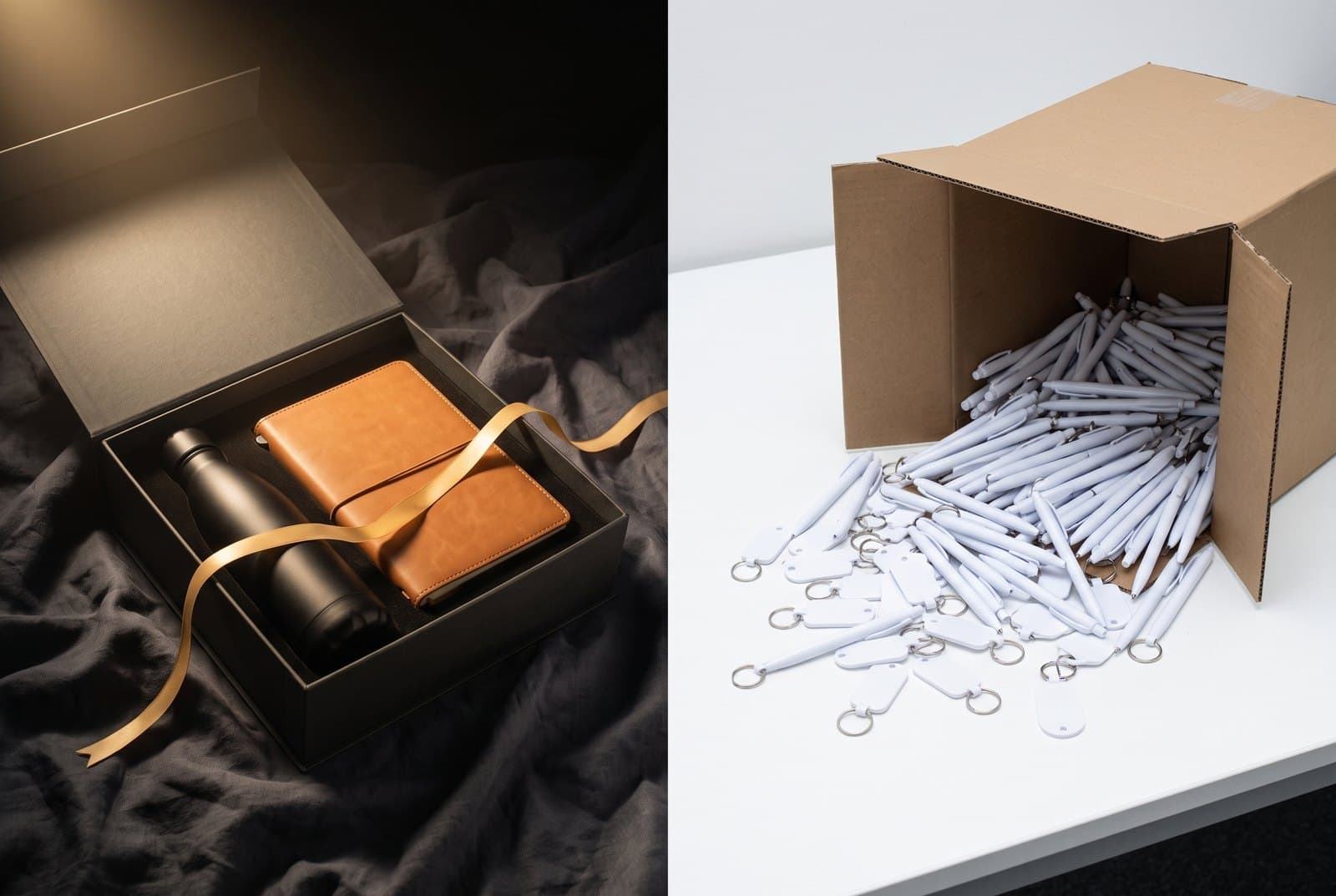
A tote that gives way at the seam on its third trip to the pasar has not saved a bottle from anything. It has moved the same waste six months down the calendar and printed a logo on the failure. This is the quiet problem with a great deal of 'eco' merchandise sold in this market: recycled is treated as permission to expect less. Thinner fabric, looser stitching, a print that lifts at the first wash — as though caring about the environment and caring about quality were competing line items.
They are not, and the recycled percentage on the spec sheet is the least interesting number in the quotation. It is easy to state, easy to photograph and, on its own, unverifiable. What actually determines whether a responsible gift is worth making is how long it survives, whether the claim on it is audited, and whether the person decorating it knows what recycled stock does under a heat press. Those three questions get asked far less often than they should. Here is what the materials can genuinely do now, what separates a defensible green claim from a hollow one, and where most of these jobs fall apart.
The number nobody puts on the spec sheet
The most sustainable gift is the one that never needs replacing. A recycled percentage photographs well; a decade of daily use does not, and yet it is the figure that decides everything. An insulated bottle in recycled stainless steel that lives on a desk for five years quietly displaces every disposable cup it stood in for. A recycled-leather folio carried into meetings for years earns its footprint back several times over. Durability is the form of environmental care that never makes the marketing copy, because it stays invisible until somebody measures a product across its whole life instead of its first week.
It is worth saying plainly, because the trade rarely does: recycled does not automatically mean low-impact. Reprocessing plastic takes energy. A badly made recycled item that fails in a month has wasted the effort that went into recovering the material in the first place — it is, in strict terms, worse than the virgin-plastic item it replaced, because it consumed a recovery process and delivered nothing. Which is exactly why the premium end and the responsible end are not in tension. Choose good material, finish it well, make it worth keeping: that single instinct serves both. A gift built to last is the greenest brief anyone can write, and it happens to be the one that keeps your name in view the longest.
What recycled stock can actually do now
The materials left the sackcloth-and-guilt phase some years ago. rPET — polyester spun from post-consumer bottles — tailors into tech organisers, laptop sleeves and jacket shells that look and feel like any premium synthetic, because that is precisely what they are. Recycled and organic cotton make tees and totes with a proper hand-feel rather than the papery one people brace for. Bamboo and cork bring warmth to drinkware, desk pieces and phone stands. FSC-certified paper carries notebooks and packaging. Recyclable aluminium makes bottles and pens that can re-enter the stream at end of life. Even ocean-bound plastic — waste intercepted before it reaches the sea — is a workable feedstock for bags and cases.
None of this asks the recipient to accept less, and that is the shift worth understanding. An rPET messenger bag is not a compromise a buyer tolerates for the sake of a credential. It is a good bag that also happens to keep a few dozen bottles out of a landfill in Selangor. When the material is chosen well the sustainability becomes the quiet part and the quality becomes the loud one, which is the right way round and the opposite of how most of it is sold.
Why cheap recycled goods look cheap
This is where well-meaning recycled merchandise usually falls down, and it is rarely the material's fault. Recycled substrates are less forgiving to decorate. A recycled-cotton weave takes ink differently from virgin cotton because the fibre length is shorter and the surface is more open. Bamboo needs the right engraving depth or the mark reads as a scorch. An rPET panel will pucker under a heat press set for virgin fabric, and it will do it on piece forty of a run of five hundred, after the first thirty-nine came out fine.
Then there is colour. Recycled feedstock varies between batches in a way virgin material does not, so a Pantone matched on a sample in April can drift by the time the second batch runs in July — and nobody notices until the reorder sits next to the original on a table. A supplier who sends artwork out to a third party and hopes will discover this at the same time you do, which is to say at delivery.
Goldvest brought branding in-house in 2019 for exactly this class of problem. UV flatbed, laser engraver, embroidery and silkscreen sit in our own building in Penang, which means the person matching your Pantone and setting the engraver is someone you can walk to, and a proof on an awkward recycled substrate does not have to be couriered anywhere or explained down a phone line to a subcontractor. Decoration is the moment a responsible material either becomes a premium object or fails to be one. On recycled stock, controlling it is not a refinement. It is most of the job.
GRS, FSC, OEKO-TEX: the letters that turn a claim into a fact
The appetite for sustainability has bred a matching appetite for greenwashing, and buyers are right to have become sceptical. 'Eco-friendly' on its own is a mood. It commits to nothing, proves nothing, and cannot be checked. What separates a defensible claim from a hollow one is verification, and verification has names. GRS — the Global Recycled Standard — traces recycled content through the supply chain, so a stated percentage is audited rather than asserted. FSC chain-of-custody does the same for paper and wood, back to a responsibly managed forest. OEKO-TEX certifies that a textile has been tested against a list of harmful substances: proof about what is not in the fabric sitting against someone's skin.
The discipline fits in one word, and it is specificity. Rather than a blanket 'sustainable gift', be able to say what makes this particular piece responsible — the recycled content and its percentage, the certification and its name, the plain fact that it is built to be used for years. Ask for the certificate number in writing rather than taking 'green' on trust, and take it as a signal when it does not arrive. Specific claims build trust. Vague ones spend it slowly and then all at once, usually in front of a procurement committee. A certification is not paperwork for its own sake; it is the only thread that lets a buyer in Kuala Lumpur stand behind a fabric processed four thousand kilometres away.
Where responsible and premium turn out to be the same brief
Backing that up takes more than intent. A great deal of the world's rPET capacity sits in the coastal-China cluster, and the Guangzhou office Goldvest has run since 2018 sits inside it — close enough to handle recycled fabric before committing to it, rather than approving a photograph and waiting to find out. That matters most at the worst time of year: when Chinese New Year falls on 6 February 2027 and Aidilfitri on 10 March, thirty-two days later, with the mainland factory shutdown sitting between them, the difference between a sample seen and a sample described is the difference between shipping and apologising.
None of which makes Goldvest a pure-eco outfit, and there is no point pretending otherwise. It is a premium corporate gifting house, MOF-certified and working with more than a thousand client companies since 1996, that takes the responsible option seriously enough to do it properly: named materials, real certifications, decoration controlled under its own roof, and an honest preference for the item somebody keeps over the one they bin. That is the entire argument. Responsible and premium were never at opposite ends of the table. Choose the material for what it is, finish it so it lasts, and they turn out to be the same gift.
Exclusive to Goldvest
Named materials, named certifications.
Sustaine is Goldvest's own recycled range — ocean-bound plastic and RPET, with OceanCycle-certified content, made in BSCI-audited factories.
42 pieces, quoted on request.
Bring us your brief.
Want a shortlist of recycled and responsibly-made pieces that still read as premium? Tell us your audience, your budget and which materials or certifications matter to you, and we will source options with the recycled content and the certification spelled out — and get real samples into your hands rather than photographs.
Start a brief